Yerevan
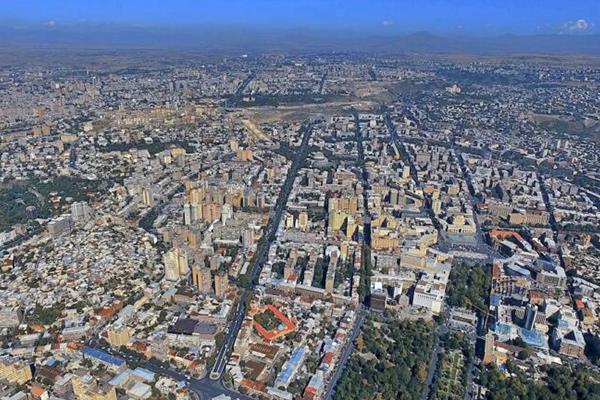
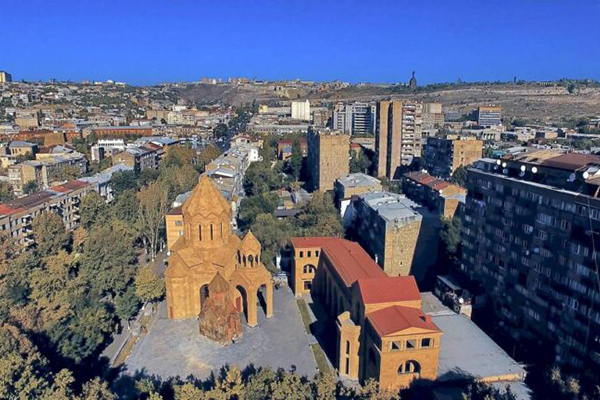
Yerevan is the capital of Armenia and one of the most important centers of the South Caucasus. It is the largest city in the country and has a long and rich history. Yerevan is a great example of early Soviet and Armenian architecture. Its historic center includes many large modern-style monumental buildings interesting museums and scenic parks. Yerevan is often called the "pink city" because most of its buildings are constructed of tuff - a rock of volcanic origin that is pink in color.
The first written references to Yerevan date back to the early 7th century. Already in the 5th century the first Christian church was built here dedicated to the apostles Peter and Paul.
Yerevan is known for its gastronomy. Inexpensive food is lahmagio - a thin-skinned pastry with minced meat and herbs. Such eateries are common throughout the city. There are also serious restaurants in Yerevan. Beverages are popular with coffee and compote. In addition to cognac Armenia has good local beer and wine.

History
Yerevan is one of the oldest cities in the world. It is believed that it was founded in the 8th century BC. when the ruler of Urartu Argishti I founded here the fortress of Erebuni. The ruins of the ancient fortress are now located in the southern outskirts of modern-day Yerevan. It should be noted that there are practically no significant archeological findings that indicate the development of this settlement since the 4th century BC.
The first written references to Yerevan date back to the early 7th century. Already in the 5th century the first Christian church was built here dedicated to the apostles Peter and Paul.
In the early Middle Ages, Yerevan was subjugated by the Arabs. In the mid-7th century the city repelled their siege. The Arabs ruled Yerevan not for long. After a while the future capital of Armenia was liberated during the uprising. Then for several centuries Yerevan was part of the state of Bagratids. In the 9th century the city was conquered by the Seljuks. In 1387 Yerevan was plundered by Tamerlane troops. This caused the medieval city the greatest damage.
During the 16th and 17th centuries Yerevan like all Armenia was the scene of Ottoman-Sephavid wars during which it more than ten times passed from hand to hand. In 1639 the city became part of Persia and was part of the collapse of the state of Safavid. In 1724 Yerevan was again captured by the Ottoman Empire. Turkey was a part of Turkey until 1827 when it was captured by Russian troops and included in the Russian Empire. In 1828 the Armenian region was formed.
As part of the Russian Empire Yerevan was a small provincial town whose population consisted of half of Armenians and the other of Azerbaijanis. The city began to develop rapidly and was built in the early Soviet period (from 1924). Now Yerevan is the largest city of Armenia one of the main economic financial and cultural centers of the Caucasus.
Geography and climate
Yerevan is located in the south of Armenia on the Left Bank of the Arax River. The city is located in the northeastern part of the Ararat Valley which in turn occupies the central part of the Armenian highlands. The capital of Armenia is surrounded on three sides by mountains: in the north-west stands Aragats (the highest point of the country) in the north lies the Kanakker Plateau and to the east are the Gegham Mountains. Yerevan is a rather hilly city. Height differences can reach 400 m. A small river Hrazdan flows through the city.
Yerevan has a continental semi-arid climate. Winter is cold, so this is not the best time to visit the capital of Armenia. Summer is quite hot. The best time to visit Yerevan is late spring and early fall.
How to get there
Yerevan Airport is Armenia's main air gate. It only accepts international flights. You can get to Yerevan by plane from Minsk, Kiev, Berlin, Athens, Riga, Tbilisi, Warsaw, Vienna, Tel Aviv, Dubai. From the airport to the city you can reach by minibus 18 or taxi.
Yerevan has a rail connection only with Georgia. A night train runs between the capital of Armenia and Tbilisi. Yerevan also has a high-speed rail link with Gyumri. The most popular transportation in Armenia is buses (minibuses) that connect the capital with the largest cities in the country.
Cuisine
Yerevan is known for its gastronomy. Inexpensive food is lahmagio - a thin-skinned pastry with minced meat and herbs. Such eateries are common throughout the city. There are also serious restaurants in Yerevan. Beverages are popular with coffee and compote. In addition to cognac Armenia has good local beer and wine.
Sights
The Antonelllian mole is one of the symbols of Turin, a 19th-century tower with a 168-meter spire. Construction of the structure began in 1863 by Alessandro Antonelli. It was planned that a synagogue would be located here. Now there is a movie museum and the tower offers stunning views of the surrounding area.
Basilica of Superga is a cathedral on a high hill east of the historical part of Turin. It was built in 1731 in honor of the victory over the French. It has beautiful Baroque architecture rich interior decoration and has many columns. The Basilica is the burial place for members of the Savoy Dynasty. It offers stunning views of the surrounding countryside with the Alps in the background. You can get upstairs both by car and by train.
San Giovanni Battista is a fine example of Renaissance architecture a cathedral built in the late 15th century and dedicated to the patron saint of the city. The facade is made of white marble and a bell tower is made of bricks. You can climb the tower. Inside you can admire the fantastic frescoes and marble statues of famous religious figures. The main attraction of the cathedral and one of the main Christian shrines is Santa Sidone or the legendary Shroud of Turin, the shroud into which the body of Christ was wrapped. The shrine is located in a closed chapel and is not accessible to the public.



